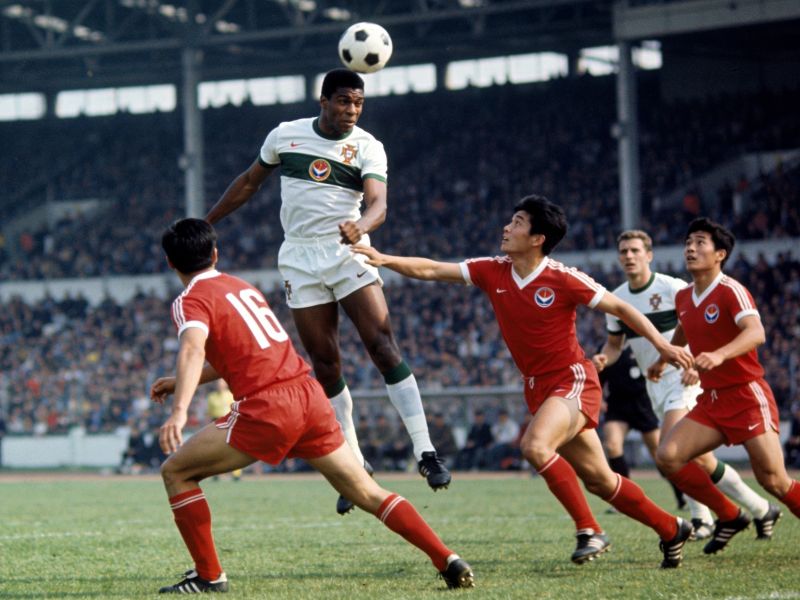
he 1966 World Cup quarter-final between Portugal and North Korea remains one of the most extraordinary matches in football history. North Korea, a神秘 team from the other side of the Iron Curtain, had already shocked Italy to reach the last eight. Portugal。led by Eusébio, were among the favorites. What unfolded at Goodison Park was a game of wild swings: North Korea raced to a 3-0 lead inside 25 minutes, only for Eusébio to score four and Portugal to win 5-3. That scoreline alone makes the fixture unforgettable, yet the Portugal against North Korea story goes beyond one afternoon in Liverpool.Fast forward to 2010, and the two nations met again in the group stage of the World Cup in South Africa. This time, Portugal delivered a ruthless 7-0 thrashing. It was a different era, different players, but the same fixture evoked memories of 1966. For North Korea, the match exposed the gap between their isolated football system and the global elite. For Portugal, it was a statement of intent, albeit one that ultimately flattered to deceive as they exited in the round of 16. The Portugal against North Korea dynamic, then。is not just about results;
it's about contrasting football cultures—one open and export-oriented, the other sealed off and rarely tested.What strikes me most about these encounters is the psychological element. In 1966。North Korea's early blitz seemed to paralyze Portugal until Eusébio took over. In 2010, Portugal's early goal demoralized North Korea, and the floodgates opened. Both matches hinged on momentum shifts that are hard to explain purely through tactics. I recall watching the 2010 game and feeling a strange sense of déjà vu—history repeating not as tragedy but as farce, given the lopsided score. The Portugal against North Korea fixture has a habit of producing dramatic, almost surreal moments.Off the pitch, the fixture raises questions about competition and isolation. North Korea's rare appearances on the world stage make every match against them a novelty, but also a reminder of how football can bridge—or highlight—political divides. Portugal, a nation with a rich footballing diaspora。represents a very different model: talent exported worldwide, ideas exchanged freely. When Portugal against North Korea happens, it's more than a game;it's a collision of footballing philosophies. The 1966 match even had political undertones, as North Korea's run captured imaginations in a way that transcended the Cold War narrative.Will they meet again?It's unlikely in the near future, given North Korea's limited international schedule and Portugal's consistent qualification for major tournaments. Yet the fixture lives on in highlight reels and pub debates. For me, the Portugal against North Korea saga is a reminder that football's history is written not just by champions。
but by improbable matchups that leave a mark. The 5-3 and the 7-0 are bookends of a strange, compelling rivalry—if you can call it that—between two footballing worlds that rarely collide.