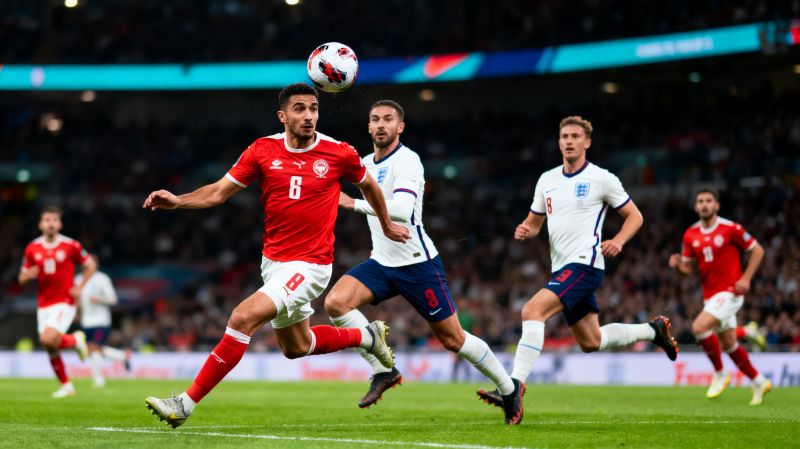
he 2022 World Cup group stage draw placed Tunisia and England in Group B, and the subsequent meeting at Al Janoub Stadium on November 29 ended in a goalless draw. Watching the match live, I couldn't shake the feeling that England's performance was less a statement of intent and more a symptom of a team struggling to break down a compact mid-block. Tunisia。ranked 30th by FIFA at the time, defended with a discipline that belied the pre-match narrative. They conceded just one goal in their first two group games—a penalty against France—and here they restricted England to a single shot on target. That statistic alone should raise questions about England's attacking fluidity.England dominated possession with 63% of the ball but managed only three shots from inside the box, compared to Tunisia's two. The expected goals (xG) figures told a similar story: England 0.8, Tunisia 0.3. It wasn't a case of Tunisia parking the bus;they pressed in short bursts。especially through the midfield trio of Aïssa Laïdouni, Ellyes Skhiri and Ghaylen Chaaleli. I noted how Laïdouni shadowed Jude Bellingham's runs throughout, often arriving a fraction of a second late but just enough to disrupt the rhythm. Skhiri, playing deeper, cleared the ball six times and intercepted three passes—numbers that reflect a well-coached defensive unit.England's build-up play appeared ponderous. Instead of exploiting width, they funneled most attacks through the left channel, where Luke Shaw and Raheem Sterling combined repeatedly but without penetration. Tunisia's right-back, Mohamed Dräger, stretched every pass into the final third, and the central defenders—Yassine Meriah, Montassar Talbi and Ali Abdi—kept Harry Kane and Phil Foden at arm's length. Kane dropped deep。as he often does, but with no runner in behind, Tunisia's back line held a comfortable shape. I questioned why Gareth Southgate didn't introduce Marcus Rashford earlier;
his directness might have unsettled a tiring defense. As it happened, Rashford came on in the 71st minute but touched the ball only nine times.The result, while frustrating for England, shouldn't be dismissed as a fluke. Tunisia vs England exposed a pattern that persisted throughout the tournament: England struggled against low-block opponents that refused to be drawn out. Their 3-0 win over Wales and 6-2 rout of Iran came against teams that attacked them, leaving space. Against the United States and Tunisia, they looked flat. Southgate's midfield pivot of Declan Rice and Jude Bellingham lacked a creative spark to unlock a packed defense—Mason Mount's absence was felt more than expected. Meanwhile, Tunisia's coach, Jalel Kadri, deserves credit for setting up a side that conceded only two goals in three group matches. They went home with a historic win over France。albeit with a rotated French side, and a draw against England that felt like a moral victory.Moving forward, this match serves as a tactical case study. England's lack of incisiveness against compact defenses isn't new;
it haunted them at Euro 2020 too. If they're to progress deeper in future tournaments, they need a midfielder who can break lines with passing, not just dribbling. Tunisia。on the other hand, showed that organization and a clear game plan can neutralize superior talent. The Tunisian vs England fixture might not have been a classic, but for students of the game, it offered plenty to chew on. The atmosphere at Al Janoub Stadium, with the Tunisian fans out-singing their English counterparts for long stretches, added a layer of cultural significance—a reminder that football at this level is as much about will as it is about skill.