he first time I heard the term 'Asian Madness' was from a Korean-American friend who described her mother's sudden, inexplicable rages—outbursts that seemed to erupt from nowhere。then vanish as quickly as they came. She called it 'the madness that runs in Asian families.' It wasn't a clinical diagnosis. It was a folk label, whispered in kitchens and passed down through generations, for a kind of psychological unraveling that mainstream mental health discourse rarely captures.Asian Madness isn't a formal psychiatric category. It's a cultural shorthand for the ways distress manifests when emotional expression is suppressed。
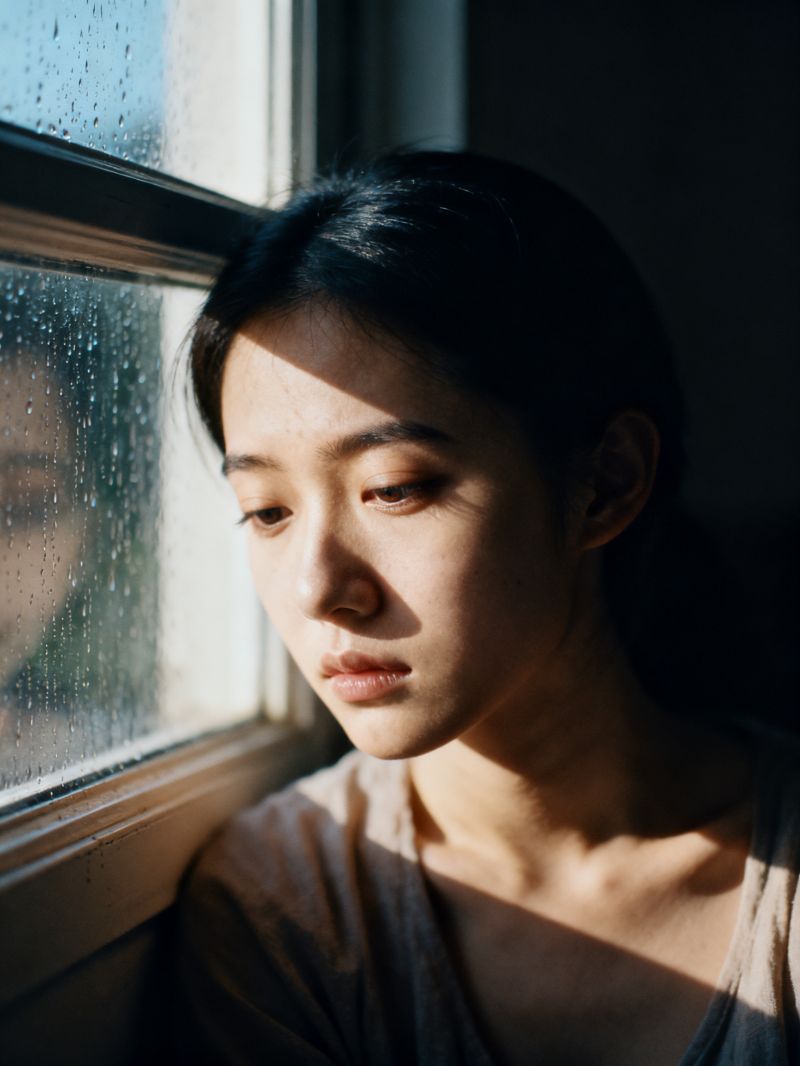
when 'saving face' outweighs self-disclosure, and when the pressure to achieve becomes unbearable. Consider the Japanese concept of hikikomori—social withdrawal affecting over a million people—or the Korean term hwabyung, an anger syndrome marked by physical symptoms like chest tightness and a feeling of a 'fireball' in the stomach. These aren't exotic curiosities. They're culturally patterned responses to distress, and they reveal how Asian Madness operates: not as a single disorder, but as a spectrum of suffering that often goes unrecognized.What strikes me most is the silence surrounding Asian Madness. In many Asian communities, mental illness carries a double stigma—not only the shame of being 'crazy' but the shame of burdening the family. A 2019 study in the Asian American Journal of Psychology found that Asian Americans underutilize mental health services at rates far lower than other racial groups, often citing fear of bringing dishonor. I've seen this firsthand: a Vietnamese colleague who hid her postpartum depression for months because she feared her mother-in-law would call her 'weak.' The madness。in such cases, isn't the illness itself—it's the impossible choice between suffering in silence and risking familial rejection.The consequences are stark. Asian Madness often surfaces somatically—headaches, fatigue, digestive issues—because many Asian cultures lack a vocabulary for emotional pain. A Filipino friend once told me her grandmother would complain of 'cold hands' whenever she was heartbroken. Doctors would run tests, find nothing, and send her home. Only decades later did the family realize those cold hands were grief. This somatization isn't mysterious;it's a survival strategy. When words are unavailable。the body speaks. And when the body speaks, Asian Madness gets dismissed as 'just stress' or 'a weak constitution.'Changing this requires more than culturally competent therapy—though that helps. It demands a reckoning with the values that make Asian Madness so silent: the rigid hierarchy of filial piety, the equation of academic success with human worth, the terror of being seen as a failure. I don't have a neat solution. But I know that naming Asian Madness—not as a stereotype, but as a real and painful pattern—is a start. The madness isn't in our blood. It's in the air we've been taught to breathe. And the first step toward healing is admitting we've been holding our breath for far too long.